Packaging is the last thing that happens to a component and the first thing a customer sees. It is also, more often than most buyers expect, the thing that decides whether a perfectly good batch of seals is accepted or quarantined on arrival.
We have seen parts that were dimensionally correct, correctly compounded and fully certified held at goods-inwards because the bags were unmarked, because loose elastomer had picked up swarf in transit, or because an inspector could not tie a bag of black O-rings to a batch certificate without opening it. None of those are moulding failures. All of them are packaging failures, and a packaging failure costs the same in delay and paperwork as a real one.
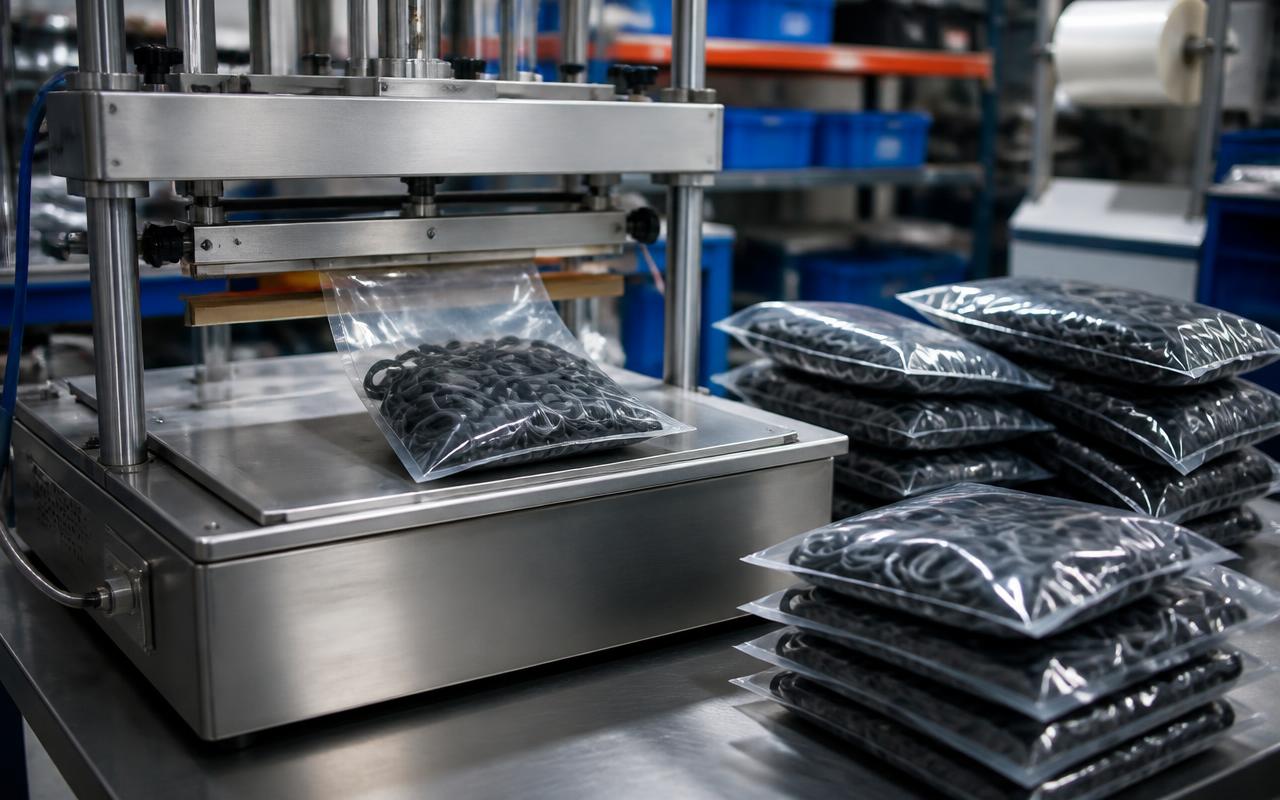
That is why we treat packaging as part of the specification rather than as despatch housekeeping, and why our bagging line runs to BS 3F 69:1979 using printed bags.
What BS 3F 69:1979 covers
BS 3F 69 sits in the British Standards 3F series, which covers materials and components for aircraft use. The 1979 specification deals with polythene bags for packaging aircraft parts: the film itself, the construction of the bag, and the marking expected of it.
The useful thing is to understand what the standard is protecting against. Aerospace goods-inwards is a controlled environment with a low tolerance for ambiguity, and a bag has three jobs in it.
Protect the part between the moulding shop and the point of fitment. For elastomers that means keeping dust, swarf, moisture and ozone away from the sealing surface.
Carry identity without being opened. A sealed bag that has to be opened to identify its contents has failed, because opening it destroys the protection it was providing.
Behave predictably as a material. Gauge, cleanliness and freedom from contaminating additives all matter when the film sits in direct contact with a moulded elastomer for months or years of shelf life.
The 1979 date occasionally raises eyebrows. It should not. Aerospace standards stay current for as long as the requirement they describe is stable, and the requirement for clean, marked, adequately gauged polythene has not changed. Plenty of drawings in active production still call it out by name. Where a customer's own packaging specification supersedes it, we work to theirs instead.
Why elastomers are a particular case
Most packaging standards are written with rigid parts in mind. Rubber has its own shelf-life failure modes, and they are the reason the bag matters more here than it would for a machined bracket.
Ozone attack. Ozone cracks strained elastomer surfaces, and the concentrations produced by ordinary electrical equipment are enough to do it. A sealed polythene bag is a meaningful barrier, which is one reason we seal rather than fold and tape.
Storage strain. An O-ring stored stretched over a peg or crushed into a corner takes a set, and it is still carrying that set when it is fitted. Bags sized to the part, filled to a controlled quantity and laid flat avoid imposing strain in the first place.
Light and heat. Direct sunlight and warm storage age rubber. Packaging cannot rescue a bad warehouse, but opaque outer cartons and sensible bag quantities help.
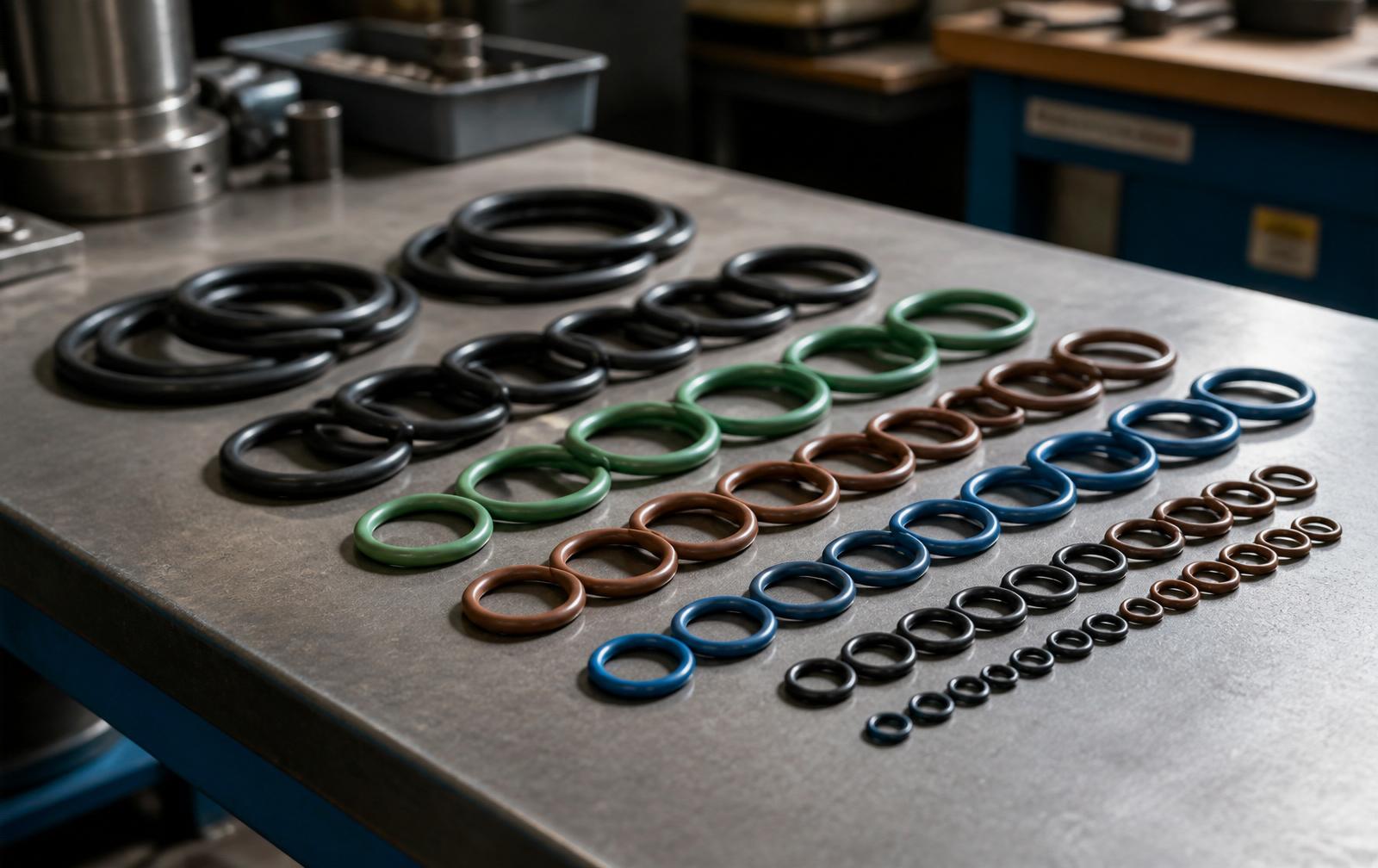
Cross-contamination. Mixing compounds in one bag is the classic route to a nitrile seal ending up in a phosphate-ester system. One compound, one batch, one bag - however similar two black O-rings look.
Shelf life. Elastomer shelf life runs from cure date, so the cure date has to travel with the part. If it is not on the bag, it will be lost.
The bagging line
We run a semi-automated bagging machine rather than hand-bagging, and the reason is repeatability rather than speed.
Hand-bagging is perfectly capable of producing a good bag. It is not capable of producing ten thousand identical good bags. Seal quality drifts with operator fatigue, counts drift with concentration, and marking drifts with whoever is holding the pen. Each of those drifts is a potential non-conformance at somebody's goods-inwards.
The semi-automated line fixes the variables that matter.
Consistent heat seals. A machine-set seal bar gives the same seal width and temperature on the first bag of a run and the last, which is what makes the barrier claim credible.
Controlled counts. Bagging to a defined quantity means stock can be booked in without counting, and a short bag becomes an exception rather than a possibility.
Printed bags rather than written labels. Print does not smudge, does not peel off and does not depend on handwriting. Part number, batch, quantity, compound and cure date stay legible through the film without breaking the seal.
Repeatable presentation. The batch that arrives in March looks like the one that arrived last October. That sounds cosmetic; in practice it is what stops an inspector treating a delivery as an anomaly.
What goes on the bag
Marking is where most packaging non-conformances actually occur, so it is worth being specific. As standard we identify the part number exactly as it appears on the customer drawing, including issue or revision where the drawing is revision-controlled; the description and compound, so the material is visible without reference to paperwork; the batch or lot number, tying the bag to the certificate of conformity and back through to the compound certification; the quantity in the bag; the cure or manufacture date in the quarter-and-year form conventionally used for elastomers; and our name, so the source is unambiguous.
Where a customer's packaging specification calls for more - an internal part number, a purchase order reference, a serial or a barcode - that goes on too. Setting it up once at the bagging stage is far cheaper than having a delivery held while somebody relabels it.
Getting it right at enquiry stage
Packaging is the requirement most often left off an enquiry and most often discovered late. Three questions save the most time.
Is there a packaging specification on the drawing or purchase order? BS 3F 69, a customer standard or a general commercial requirement each lead to a different bag. If it is called out, tell us at enquiry rather than at first delivery.
What bag quantity suits your process? Kit quantity, line-side quantity and shipment quantity are different decisions, and the right one usually depends on how the part is consumed rather than how it is made.
What does your goods-inwards need to see? If your inspection reads a barcode, we would rather print one than have you generate labels on receipt.
There is nothing clever about any of this. A moulded part is only really finished when it turns up at the bench in one piece, with someone able to tell at a glance what it is and which batch it came from.
Send the drawing and the packaging requirement together and we will get the bagging, marking and traceability right first time.